







There's a cardiovascular risk marker that most people have never heard of, despite decades of research linking it to heart disease and cognitive decline. It's not cholesterol. It's not blood pressure. It's homocysteine, and cardiologists are increasingly paying attention to it.
If you've never had your homocysteine levels checked, you're not alone. Despite compelling evidence connecting elevated homocysteine to cardiovascular disease, it's not part of standard blood work in most countries. But that's starting to change as research continues to mount, and as we better understand the biochemical pathways that keep our hearts healthy.
Here's what you need to know about homocysteine, why it matters for your heart, and how a lesser known supplement called TMG (trimethylglycine) plays a crucial role in keeping levels in check.
What Is Homocysteine?
Homocysteine is an amino acid produced naturally in your body during the metabolism of methionine, an essential amino acid found in protein-rich foods like meat, fish, eggs, and dairy. Under normal circumstances, your body quickly converts homocysteine into other beneficial compounds through a process called methylation.
Your body should efficiently clear it through two main pathways: one using B vitamins (folate, B6, and B12) and another using a compound called betaine, which comes from TMG.
When these pathways don't function optimally, homocysteine accumulates in your bloodstream. And that's where problems begin.
The Homocysteine-Heart Disease Connection
The link between elevated homocysteine and cardiovascular disease has been studied for decades. Research shows that people with high homocysteine levels have a significantly increased risk of:
-
Coronary artery disease
-
Peripheral vascular disease
-
Blood clots (thrombosis)
-
Atherosclerosis (hardening of the arteries)
But how does homocysteine actually damage your cardiovascular system?
High homocysteine levels appear to injure the delicate lining of your blood vessels (the endothelium), promote inflammation, increase oxidative stress, and make blood more prone to clotting. Over time, this creates the perfect environment for plaque buildup and arterial damage.
A meta-analysis published in the BMJ found that a 5 µmol/L increase in homocysteine was associated with approximately a 20% increased risk of coronary heart disease.
What makes homocysteine particularly concerning is that elevated levels often exist without symptoms.
Why Homocysteine Levels Rise
Several factors can cause homocysteine to accumulate:
-
Nutritional deficiencies: Low levels of folate, vitamin B6, or vitamin B12 impair your body's ability to process homocysteine efficiently.
-
Genetic factors: Some people have genetic variations (like MTHFR mutations) that affect how well they metabolise homocysteine.
-
Age: Homocysteine levels tend to increase with age, partly due to declining kidney function and reduced B vitamin absorption.
-
Lifestyle factors: Smoking, excessive alcohol consumption, high coffee intake, and lack of physical activity can all elevate homocysteine.
-
Certain medications: Some drugs, including certain anti-seizure medications, can interfere with homocysteine metabolism.
-
Kidney disease: Your kidneys help clear homocysteine, so impaired kidney function leads to accumulation.
The conventional approach to lowering homocysteine has been B vitamin supplementation, particularly folate, B6, and B12. And while this works for many people, it's not the complete picture.
Enter TMG: The Overlooked Methylation Support
TMG (trimethylglycine), also known as betaine, is a compound naturally found in foods like beetroot, spinach, quinoa, and shellfish. But you'd need to eat enormous quantities of these foods to get therapeutic amounts, which is why supplementation makes sense for many people.
Here's where TMG becomes crucial for heart health: it provides an alternative pathway for clearing homocysteine that doesn't rely on B vitamins.
When you take TMG, it donates a methyl group to homocysteine, converting it into methionine (which your body needs) and leaving you with lower homocysteine levels. This process is called remethylation, and it's one of your body's primary defence mechanisms against homocysteine accumulation.
Why TMG Matters More If You're Taking NMN
This is where things get particularly interesting for longevity-focused individuals.
NMN (nicotinamide mononucleotide) has become increasingly popular for its role in boosting NAD+ levels, which decline with age and are critical for cellular energy, DNA repair, and overall longevity.
But when your body metabolises NMN and other NAD+ precursors, it consumes methyl groups in the process. If you're taking NMN regularly without adequate methylation support, you could potentially deplete your methyl donor pool, which may lead to elevated homocysteine levels.
Think of methyl groups as a currency your body uses for thousands of biochemical reactions. NMN metabolism "spends" this currency. TMG "replenishes" it.
This is why many longevity researchers and informed practitioners recommend taking TMG alongside NMN, not as an optional add-on, but as an essential complement to protect your methylation capacity and keep homocysteine in check.
Beyond Heart Health: TMG's Other Benefits
TMG's benefits extend beyond cardiovascular protection:
-
Liver health: TMG supports liver function and fat metabolism, which is why it's sometimes used to support liver health in conditions like fatty liver disease.
-
Athletic performance: Some research suggests TMG may improve power output, strength, and body composition, likely through its role in creatine synthesis.
-
Methylation support: Beyond homocysteine, proper methylation is crucial for DNA repair, neurotransmitter production, detoxification, and gene expression.
-
Osmolyte function: TMG acts as an osmolyte, protecting cells from dehydration and stress.
Simply Nootropics TMG
Understanding the critical role TMG plays in methylation and cardiovascular health, Simply Nootropics offers two formulations designed to meet different needs:
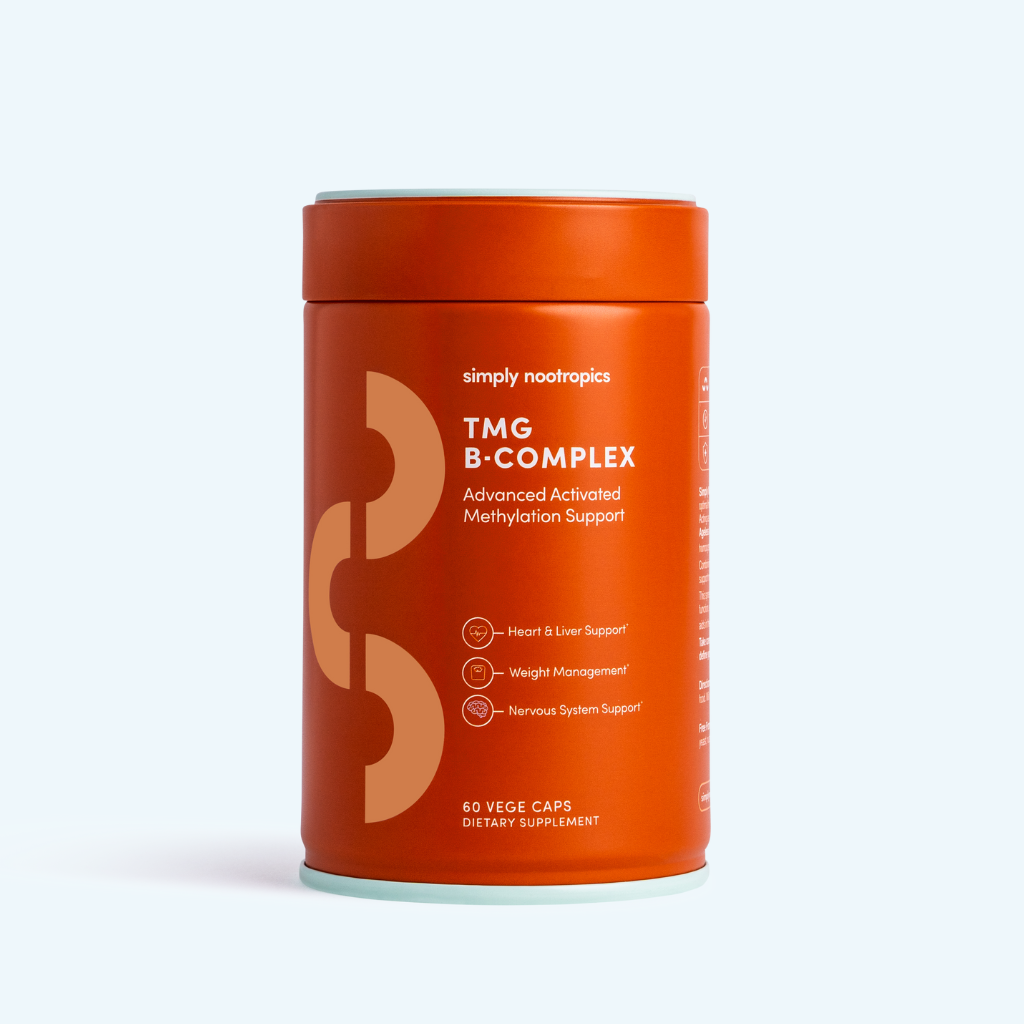
TMG B-Complex Capsules combine 1000mg of pure TMG with a comprehensive B vitamin complex including methylated folate (B9), B1, B2, B6, and B12. This formulation recognises that both pathways, the TMG pathway and the B vitamin pathway, work together to manage homocysteine effectively. The inclusion of methylated B vitamins is particularly important for individuals with MTHFR genetic variations who may struggle to utilise standard forms of folate.
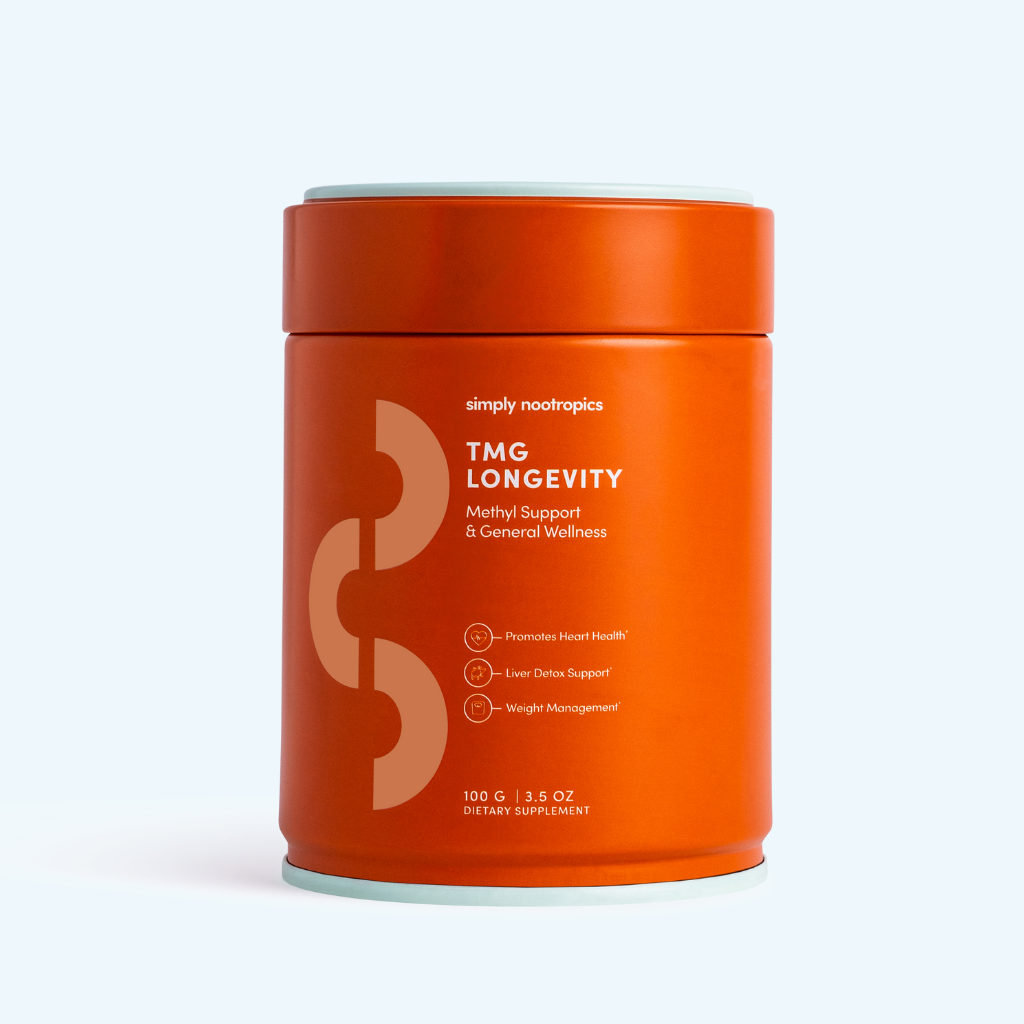
TMG Powder offers pure trimethylglycine in a convenient powder form. What makes this offering particularly valuable is that it comes free with every purchase of Ageless NMN Powder, acknowledging the essential relationship between NMN supplementation and methylation support. If you're investing in NAD+ optimisation through NMN, you need methylation support through TMG, and Simply Nootropics makes this effortless by including it automatically.