












You probably know one. The friend who texts you at 6am, already back from a run and on their second coffee. Meanwhile, you're still negotiating with your alarm. It's tempting to put the difference down to discipline, but the science tells a far more interesting story.
The time you naturally wake up comes down largely to your chronotype, the timing your body clock prefers, and a lot of it was set long before you made a single decision about your mornings.
Here's what shapes it, why it shifts across your life, and how to work with the clock you have.
What Is a Chronotype?
Your body runs on an optimal circadian rhythm, an internal cycle of roughly 24 hours. It tells you when to feel alert and when to feel sleepy, and it times hormone release, body temperature and digestion. The master clock sits in a small region of the brain called the suprachiasmatic nucleus. It reads light signals from your eyes and keeps the rest of your body in step.
Your chronotype describes where your personal clock sits on that 24-hour timeline. Researchers treat it as a spectrum rather than two neat boxes:
-
Morning types (the larks) feel sharpest early and get sleepy early in the evening.
-
Evening types (the owls) hit their stride later and often struggle to fall asleep before midnight.
-
Most people sit somewhere in the middle and lean gently one way or the other.
Neither end is better. They simply run on different schedules.
Your Genes Set the Starting Point
A large part of your chronotype is inherited. A genome-wide study of nearly 700,000 people identified 351 regions of the genome linked to being a morning person. Many of them sit close to genes that run the circadian clock itself, and others relate to how the eye processes light.
Earlier research on a clock gene called PER3 found that different versions of the gene tracked with extreme morning and evening preference. Your genes help decide how fast your internal clock ticks. When scientists removed people from all time cues, they found the average human clock runs at just over 24 hours. Small differences in that cycle length change how easily your clock drifts earlier or later each day, and light has to reset it every morning.
So if you've always been the last one awake at every sleepover, there's a good chance your biology had a hand in it.
Age Moves the Clock
Your chronotype also changes as you get older, and the pattern is surprisingly predictable. A study of more than 25,000 people found that chronotype gets steadily later through the teenage years and reaches its latest point around age 20. After that, it drifts earlier again for the rest of adulthood.
Here's what that looks like across a lifetime:
-
Young children tend to wake early, often much earlier than their parents would like.
-
Teenagers shift later, which is why a 7am start feels brutal to so many of them.
-
Adults in their twenties and beyond gradually move back towards earlier sleep and wake times.
-
Many people later in life find themselves waking earlier than they ever did before.
That sleepy teenager isn't lazy. Their clock is running on a different schedule.
Light Is the Clock's Main Signal
Genes and age set your baseline, but light decides how your clock behaves day to day. Morning light pulls your clock earlier, and bright light in the evening pushes it later.
One of the clearest demonstrations comes from a camping study in Colorado. After a week with only natural light and no electric lighting, participants' internal clocks shifted around two hours earlier. The night owls changed the most, and their timing ended up much closer to the early risers'.
Modern life works against this. Many of us spend our days indoors under dim lighting and our evenings in front of bright screens. The result is a body clock that keeps sliding later than it would under natural light.
When Your Clock Clashes With Your Calendar
Problems start when your natural timing and your schedule don't match. Researchers call this social jetlag. It describes the gap between the sleep your body wants on free days and the sleep your alarm allows on work days.
Owls feel it most, because standard work and school hours are built around earlier schedules. The study that coined the term linked a larger mismatch with higher use of caffeine, alcohol and nicotine. Sleeping in at the weekend feels like catching up, but it also resets your clock later and makes Monday harder.
Can You Become a Morning Person?
You can shift your clock, but you can't rewrite your genes. Owls can move their timing earlier with consistent habits, even if they'll never feel like natural larks. These steps make the biggest difference:
-
Get outside within an hour of waking, because daylight is the strongest signal your clock receives, even on overcast days.
-
Dim the lights and put your screens away in the hour before bed.
-
Keep your wake-up time consistent across the week, including weekends, to shrink social jetlag.
-
Move your bedtime earlier in 15-minute steps rather than all at once.
-
Stop caffeine by early afternoon, since caffeine taken six hours before bed can still cut sleep by more than an hour.
-
Save your most demanding tasks for the hours when you naturally feel sharpest.
Wind Down Better With Genius Sleep
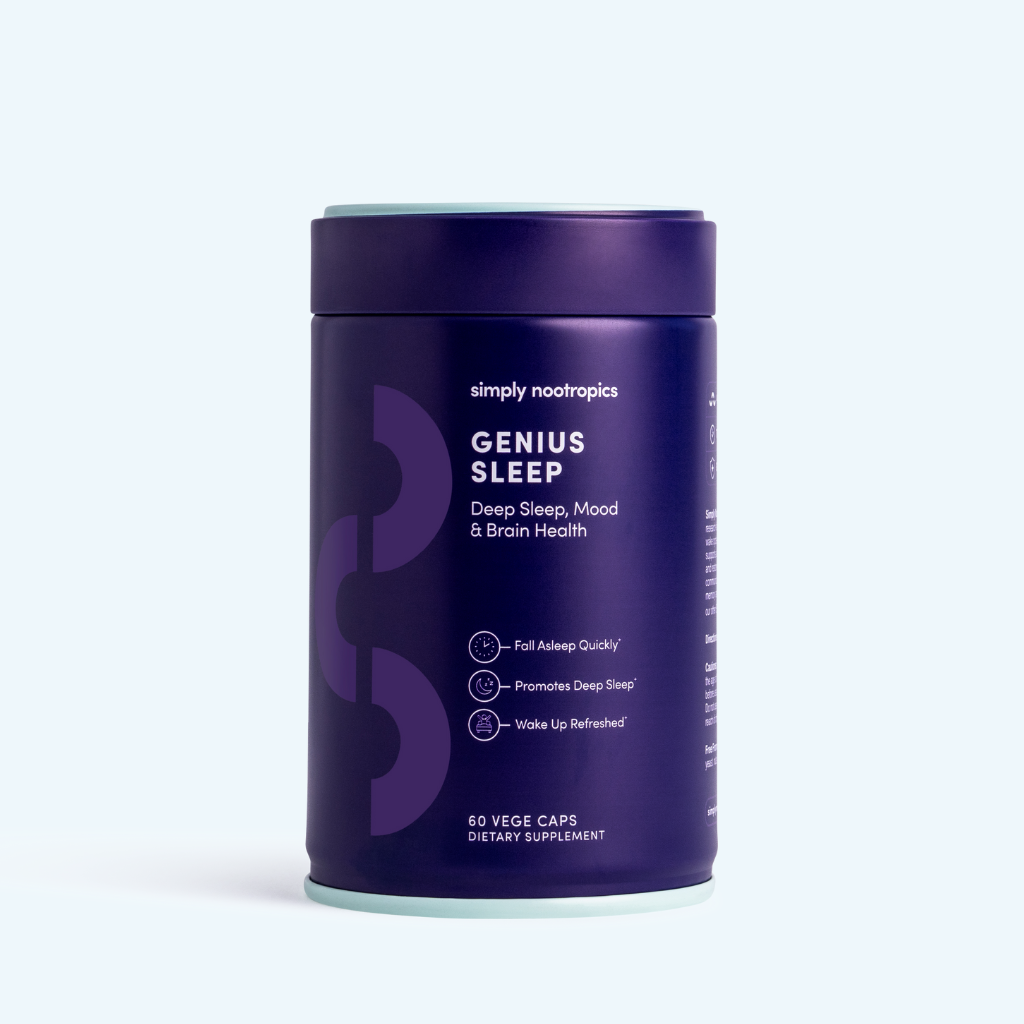
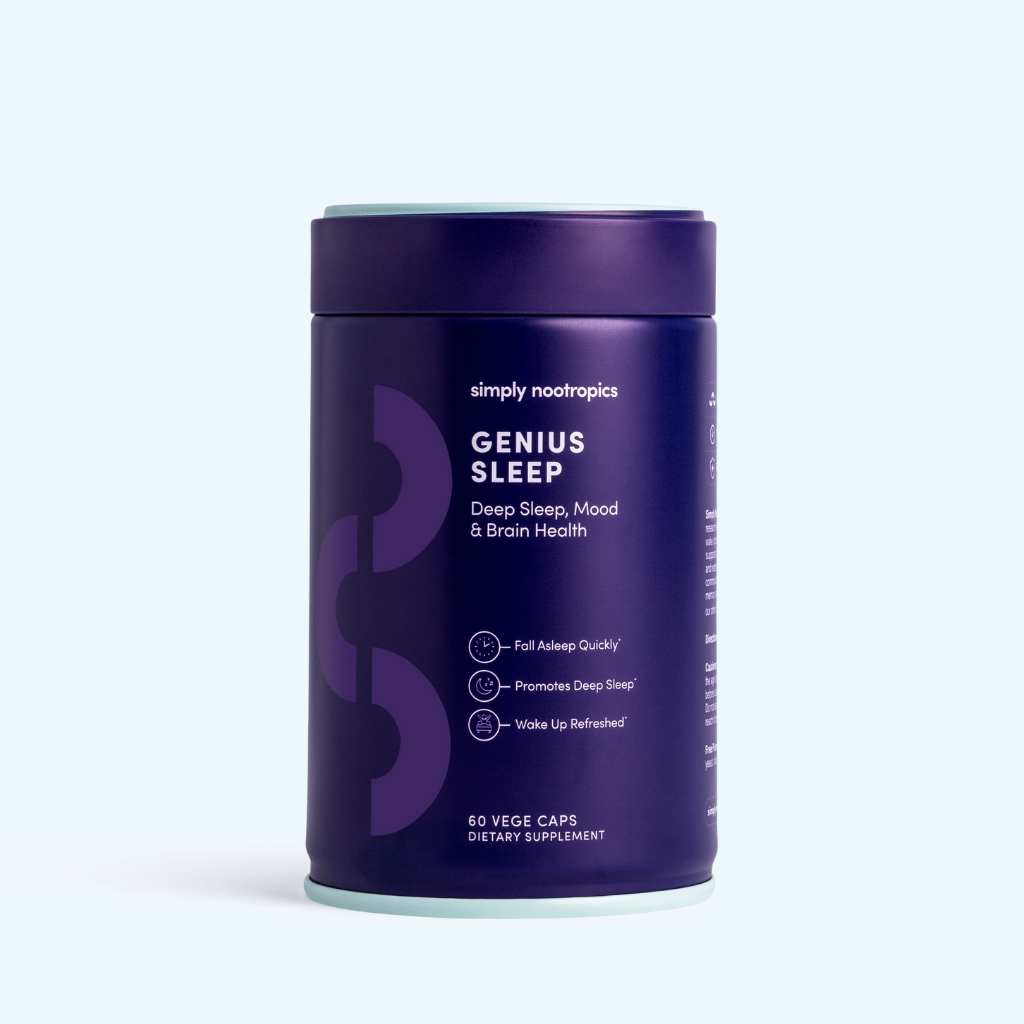
Consistent cues matter most in the hour before bed, and that's where Genius Sleep comes in. Two capsules at bedtime, or up to an hour before, bring together reishi mushroom, magnesium bisglycinate, L-theanine, passionflower and tart cherry to help you relax and settle into deeper, more restful sleep.
The formula supports your body's own melatonin production without adding any melatonin, and it's non-habit-forming for nightly use. Pair it with a screen-free hour and a steady wake-up time, and you give your body clock the rhythm it's been asking for.