












It is Friday night, and you make yourself a promise. You have run on six hours since Monday, so this weekend you are going to sleep. Really sleep. No alarm, curtains drawn, phone face-down. By Sunday you will feel human again.
It is a lovely plan. The catch is that your body may not agree the maths works out. Can two long lie-ins genuinely repay a week of short nights, or does it just feel that way on Sunday morning?
Here is what the science actually says.
First, what "sleep debt" really means
Sleep debt is the gap between the sleep you need and the sleep you get. Most adults need somewhere between seven and nine hours a night. If you are running on six, you are building a shortfall of an hour or two every single night, and it adds up fast. Five weekday nights at six hours can leave you five to ten hours short by the time Saturday arrives.
Your body keeps a running tab. The longer you stay awake, the more pressure to sleep builds up, which is exactly why a heavily short-changed week leaves you desperate for a lie-in. That craving is real. It is your body doing its job.
So can you pay it back?
Partly, yes. This is the part that surprises people.
For years the accepted wisdom was that lost sleep is gone for good. More recent research is a little gentler. Studies have found that people who sleep too little during the week but catch up at the weekend tend to fare better than those who stay short-changed all seven days. Some research has even linked weekend recovery sleep to lower levels of the low-grade inflammation that chronic sleep loss tends to raise.
So a weekend lie-in is not useless. If the choice is between a long Saturday sleep and no recovery at all, the lie-in wins. Your body will gratefully take back some of what it is owed.
The catch: what a lie-in cannot fix
Here is where the promise falls apart a little. Catching up at the weekend does not fully undo a week of short nights. Recovery sleep can ease how sleepy you feel, but it does not completely restore the things that matter most, like sharp attention, steady mood, and healthy metabolism. The cumulative effects of weekday sleep loss linger, even after a big Saturday sleep.
There is a sneakier problem too. A good lie-in can create a false sense of a reset. You wake up on Sunday feeling restored, assume the slate is clean, and head into the new week ready to run short all over again. The feeling of recovery arrives well before the full repair does, and that gap is exactly where people get stuck in a cycle.
The bigger issue: social jetlag
There is a second problem hiding inside the weekend lie-in, and it has a name: social jetlag.
When you sleep 11pm to 6.30am on weekdays and then drift to 1am until 10am at the weekend, your body clock goes through something close to flying across a few time zones and back, without ever leaving your bed. Your internal timing gets dragged later on Saturday and Sunday, then hauled forward again on Monday.
That mismatch matters. Researchers have linked social jetlag, the regular gap between your weekday and weekend sleep timing, to a higher risk of cardiometabolic problems, including issues with blood sugar regulation and overall metabolic health. The disruption is not really about the total hours. It is about the constant shifting of when those hours happen.
It also explains the dreaded Sunday night, when you lie there wide awake wondering why you cannot switch off. Two mornings of sleeping until ten have nudged your body clock later, so a sensible Sunday bedtime now feels far too early. Monday morning then arrives like a slap.
What actually helps you recover
The good news is that the fix is not glamorous, and it works. The single most useful habit is a consistent wake time, including at the weekend. Keeping your rise time within about an hour of your weekday alarm protects your body clock while still letting you rest.
If you are running short, shift your bedtime 30 to 60 minutes earlier for a few nights rather than banking one enormous sleep. A short daytime nap of 15 to 30 minutes can top you up without wrecking that night's sleep.
The wind-down matters just as much. Screens off before bed, caffeine finished by early afternoon, and a calm, repeatable routine all help your body recognise that sleep is coming.
The formula built for your wind-down
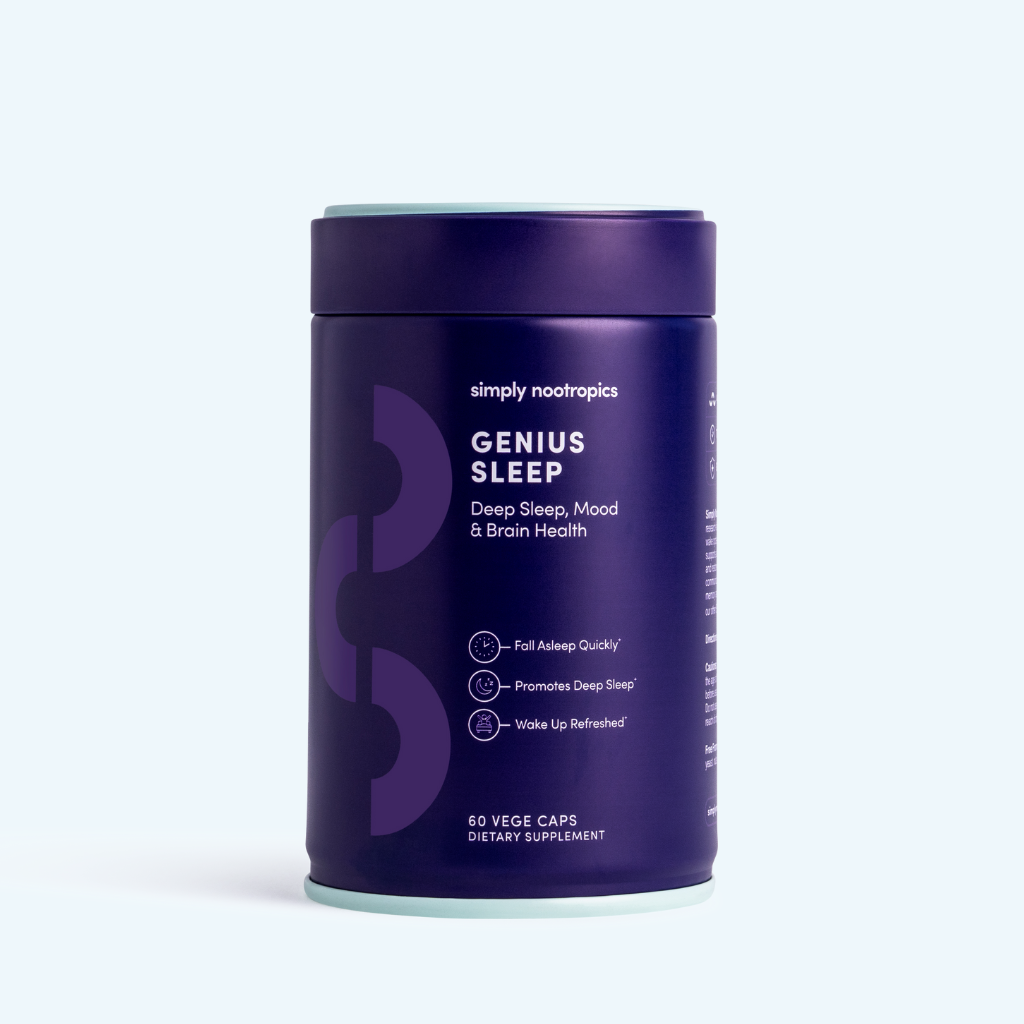
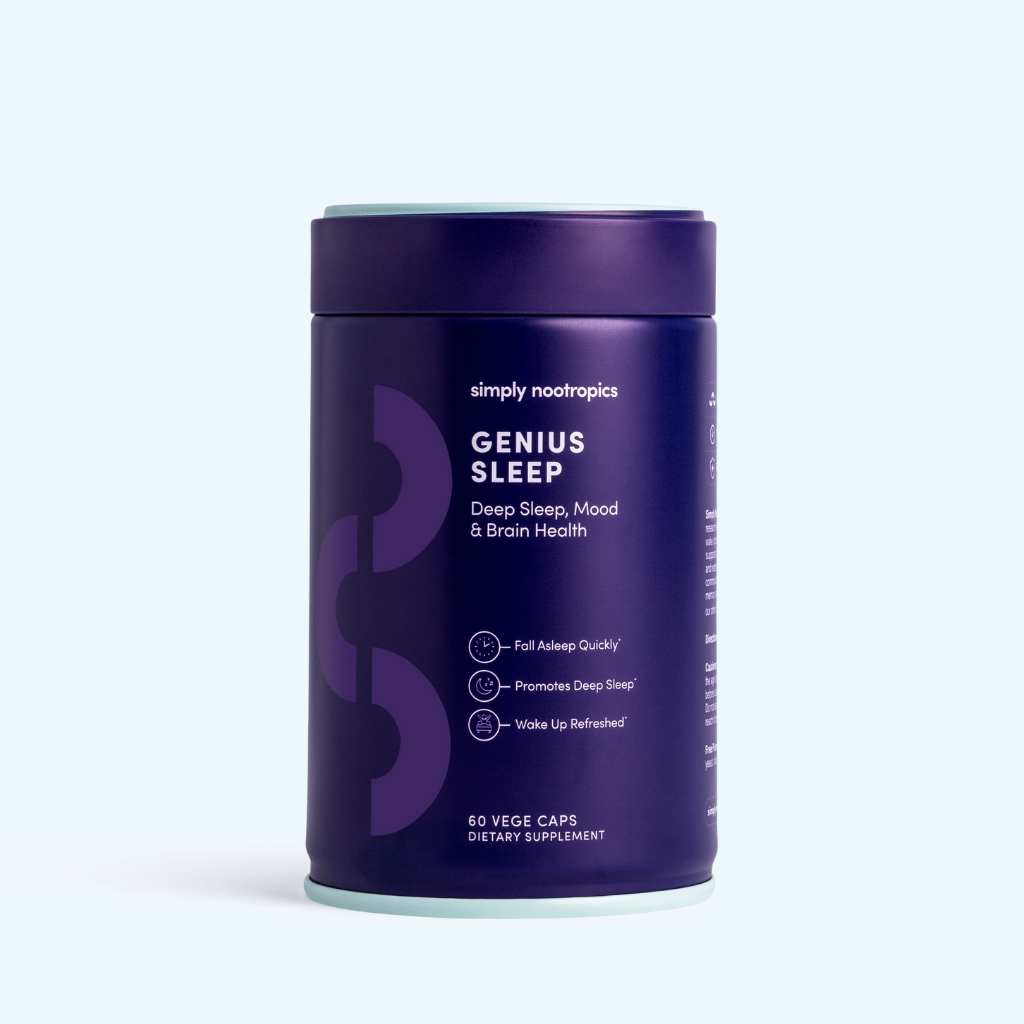
If steadier everyday sleep is the goal, Genius Sleep was made for the hour before bed. It brings together seven relaxation and sleep-supporting ingredients, including magnesium bisglycinate, L-theanine, L-tryptophan, tart cherry extract, passionflower, reishi, and zinc, at doses printed clearly on the label with no proprietary blends.
It is formulated to help you settle into deep, restful sleep and wake without the heavy, foggy feeling the next morning. Quality nights are what actually chip away at sleep debt, and Genius Sleep is designed to help you get more of them, on a Tuesday just as much as a Saturday.